

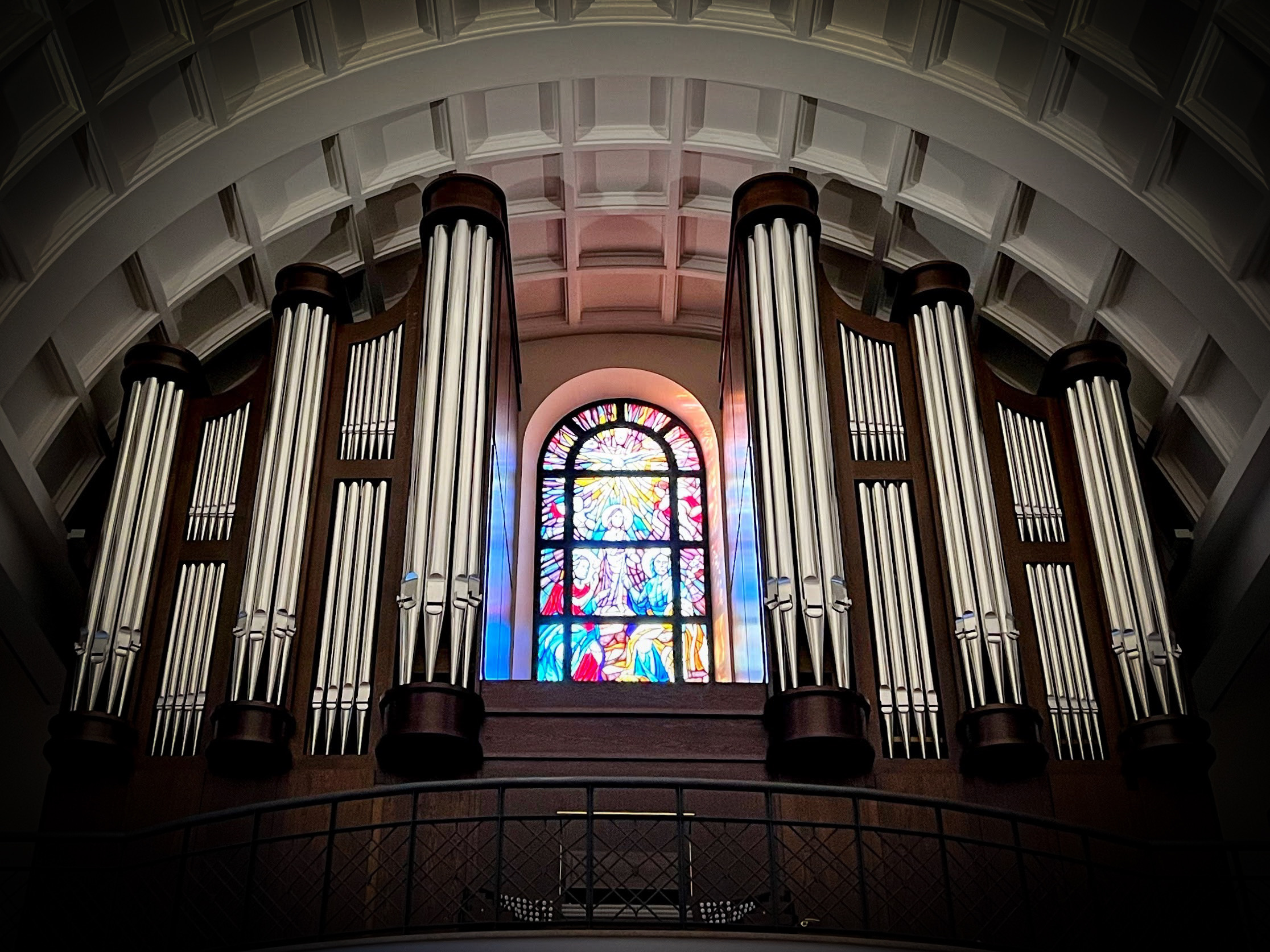
The organ in the parish of the Holy Family in Zacisze in Warsaw was built by the company Zych Zakłady Organowe
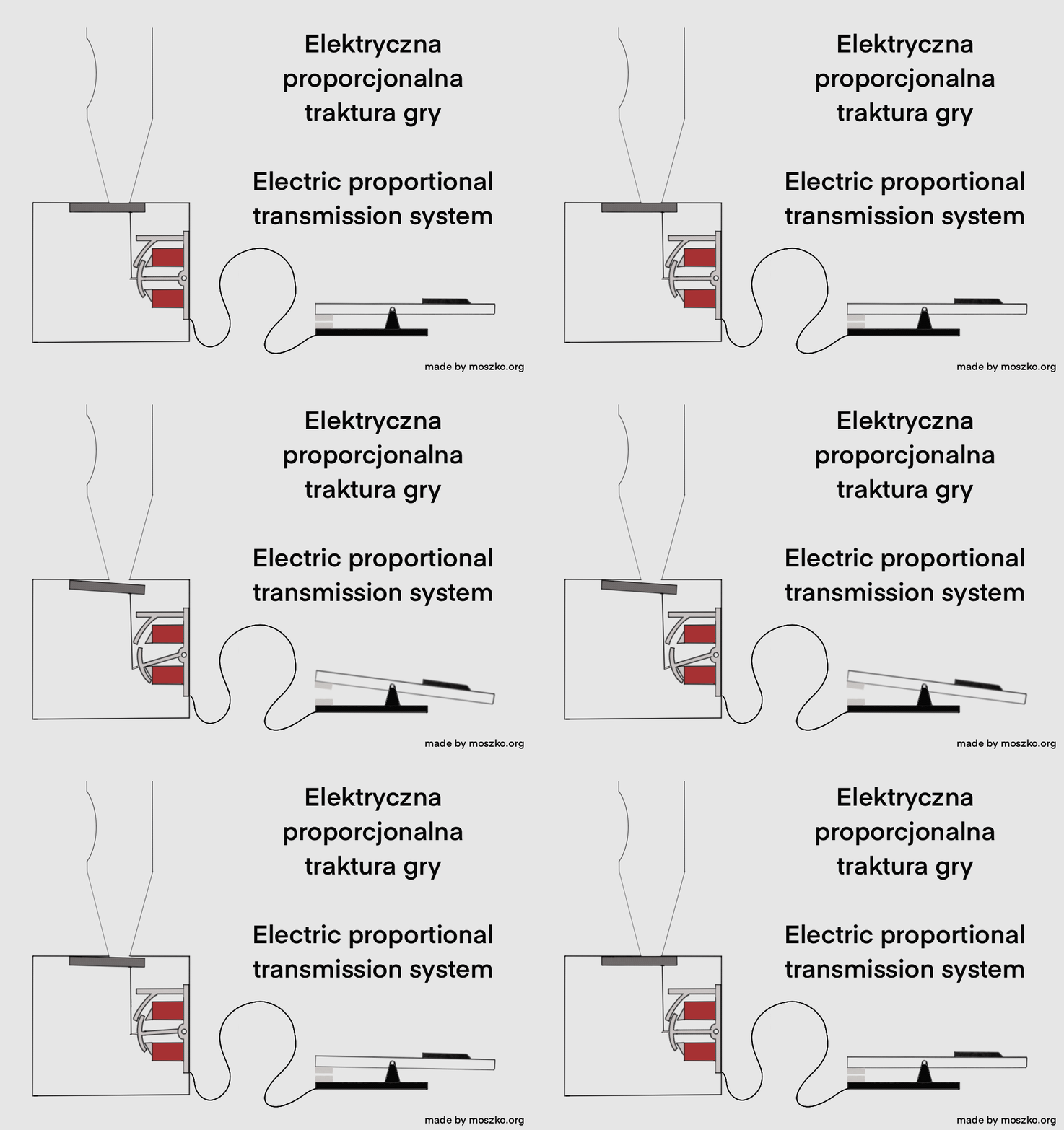
The organ has 35 voices, 4 accessories, and an electric-proportional playing mechanism and electric register movement. The proportional electromagnets used are one of the latest improvements in organ construction, because they allow you to achieve the same playing control as a mechanical one with the advantages of an electric one.
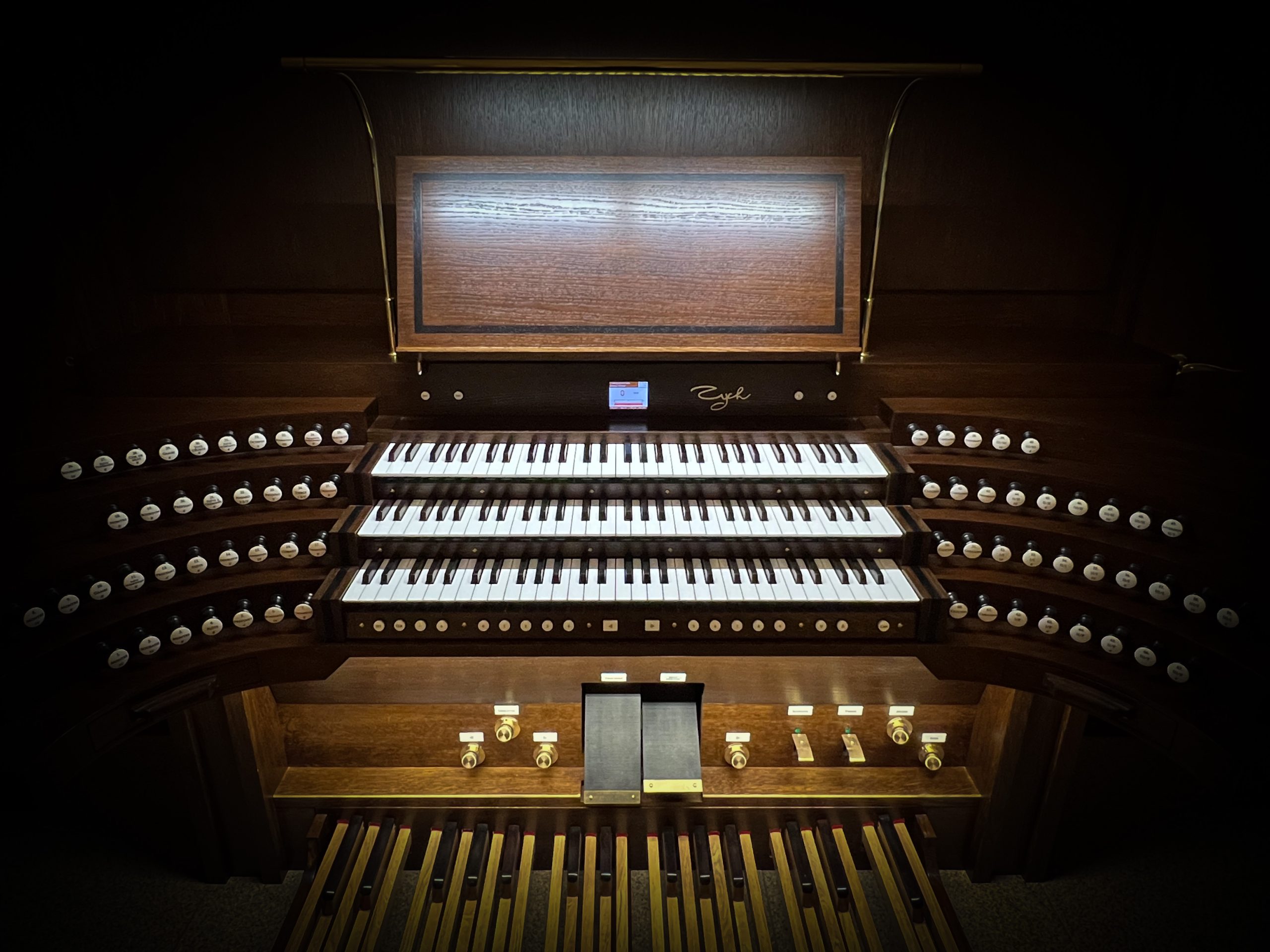
The organ also has a cauldron effect - tympan and bird singing effect- Rossignol activated by foot switches. Mentioned in the above disposition of Cloches and Carillons These are bells (having 30 tones) and tubular bells (having 25 tones), respectively. The manual scale is C-c4, the pedal scale is C-g1.
The organ has a total of 2,246 pipes (1,968 labial, 278 reeds). There are a total of 215 keys (3 manual keyboards with 61 keys and 32 keys in the foot keyboard). There are a total of 100 switches controlling various elements of the organ (including 90 switched by hands and 10 switched by feet).
Organ cabinet dimensions:
Width 8.40 m, Height 7.39 m, Depth 2.93 m. The largest pipe is 5.11 m long, the shortest playing part of the smallest pipe is 8 mm.
The ELECTRIC PROPORTIONAL playing pattern of the organ in the Church of the Holy Family in Zacisze is one of the newest inventions in recent years. It is one of the first instruments in Poland to have it. In my opinion, this is a kind of revolution in organ building, because it allows us to combine the advantages of the best mechanical and ordinary electric (zero-one) construction. In short, the organist has an influence on the way sounds are produced from the organ.
Proportional electromagnets are used, the movement of which precisely reproduces the movement of the key on the counter. For example, if the key is pressed at 69% of its depth, the electromagnet also opens the flap on the wind chute to 69% of its opening. The movement is transferred one to one in exactly the same way as with the help of abstracts (a system of slats) in an organ with a mechanical playing structure. In this way, the greatest advantage of the mechanical approach is preserved, i.e. the ability to control the sound! Many people think that there is no way to control the sound in an organ. Nothing could be further from the truth:-) You can control the beginning and end of the sound by pressing or releasing the keys faster (more energetic) and slower (softer). Of course, this affects the sound of the pipes.
In turn, the greatest advantage of the electric system is the ability to freely position all sections (groups of pipes) and the counter (playing table), thanks to which the organ can be positioned in the most optimal way for a given space. The problem of logistics of arranging abstracts, which take up a lot of space and often interfere with the optimal location of groups of pipes, also disappears. Additionally, all keyboards can be perfectly aligned because there is no system of abstractions that affect the weight of the keys.
The bonus of the electric approach is that you can install a lot of subs, supers, and other programmable gadgets, which are often very helpful, but it's just electric, regardless of whether it's proportional or not.
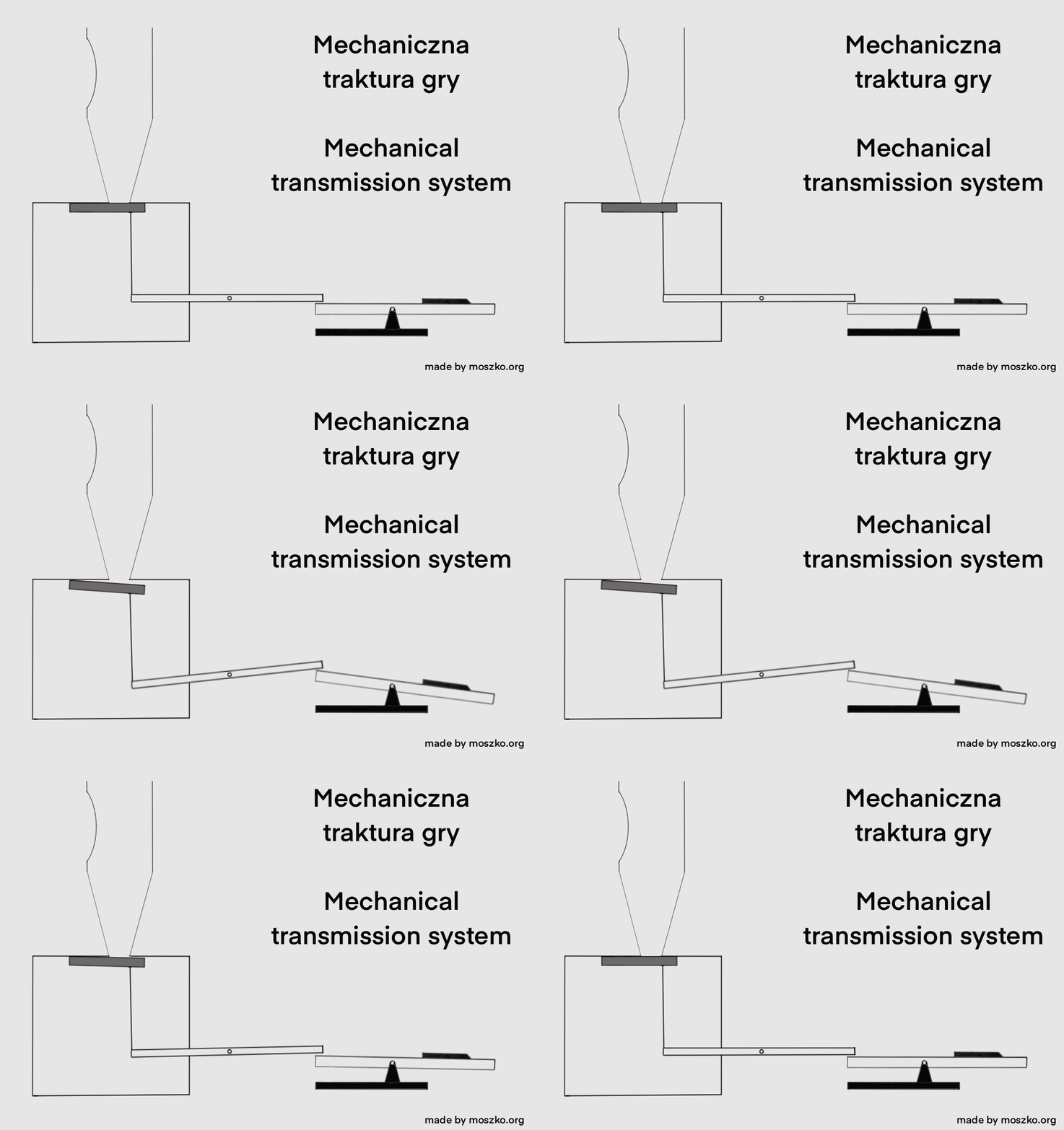
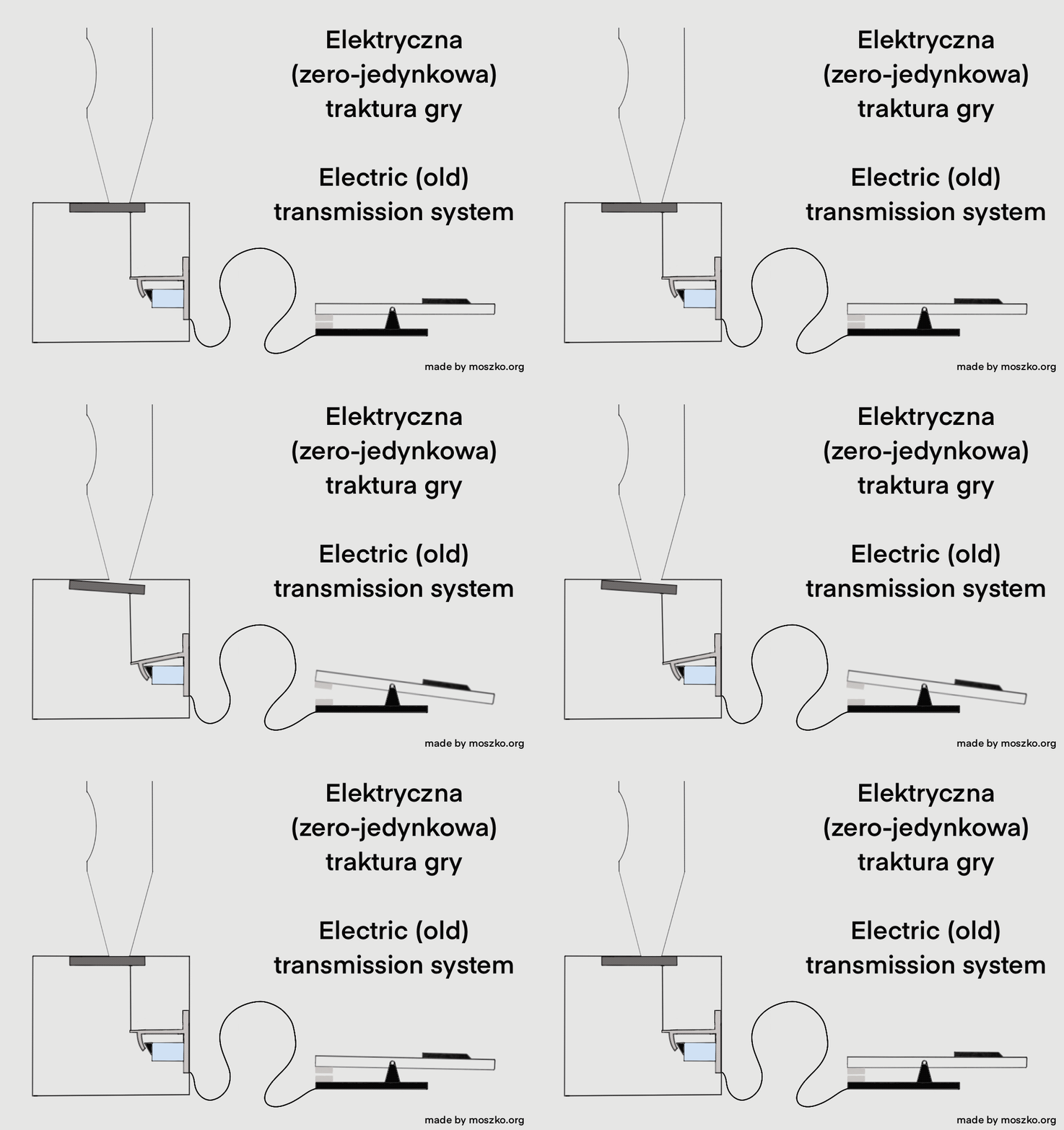
Thanks to such solutions, it was possible to place a large instrument in a relatively small choir. 35 voices + 4 accessories.
Click here, to see a gallery of the instrument's construction.
Below is also a playlist from my YouTube channel showing the construction of the instrument. I encourage you to watch.
 Subscribe